
Kord Fire Protection Issues Different Agents of Clean Fire Suppression Systems
Facilities reviewing clean agent systems should compare agent type, enclosure integrity, controls, environmental

Press Release Disclaimer: This is a press release distributed through the XPR Media network. It has not been independently verified by our newsroom.
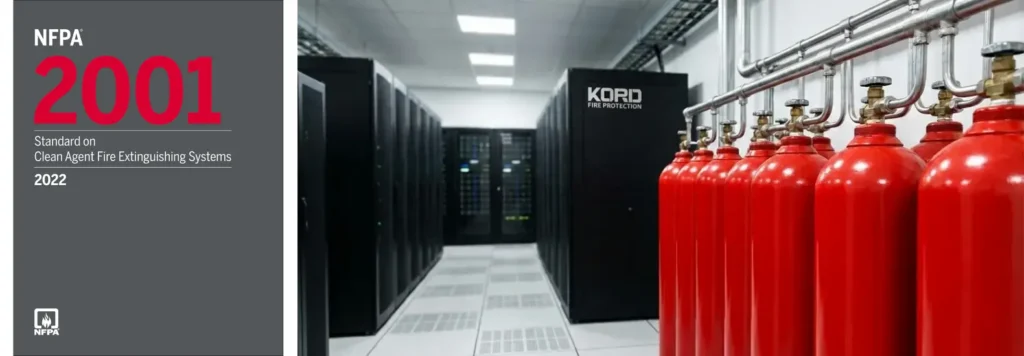

Facilities reviewing clean agent systems should compare agent type, enclosure integrity, controls, environmental factors, and maintenance requirements.
STUDIO CITY, CA, UNITED STATES, September 16, 2026 /EINPresswire.com/ — Kord Fire Protection is highlighting the growing importance of clean agent fire suppression planning as commercial and industrial facilities become increasingly dependent on electronics, data infrastructure, automation, and other high-value equipment.
Clean agent systems are commonly used in environments where traditional suppression methods may create additional operational concerns. Data centers, server rooms, telecommunications facilities, electrical rooms, laboratories, archives, control rooms, and other critical spaces may contain equipment that is sensitive to water, residue, or extended cleanup following a fire event.
Unlike water-based suppression, clean agent systems use gaseous extinguishing agents designed to suppress fire without leaving significant residue behind. Their application is generally governed by NFPA 2001, the Standard on Clean Agent Fire Extinguishing Systems, which addresses system design, installation, testing, maintenance, safety, and performance.
The term “clean agent” refers to a category rather than a single extinguishing material. Several agents and technologies are currently found across the fire protection industry.
FK-5-1-12 is a fluoroketone agent that has been used in total-flooding systems protecting sensitive equipment and enclosed hazards. HFC-227ea, commonly associated with legacy FM-200 systems, and HFC-125 are hydrofluorocarbon agents that also remain present in many installed systems.
Inert gas systems provide another approach. IG-541 uses a blend of nitrogen, argon, and carbon dioxide, while other systems may use IG-55, IG-100, or IG-01. These systems typically suppress combustion by reducing the oxygen concentration within the protected enclosure while maintaining design conditions intended to account for occupant safety.
The range of available agents has made system evaluation increasingly important for facility operators. Agent selection can depend on the protected hazard, enclosure size, occupancy, storage requirements, piping configuration, discharge pressure, environmental considerations, system listings, and requirements established by the Authority Having Jurisdiction.
Environmental policy is also influencing long-term planning. Hydrofluorocarbon-based agents are part of a broader regulatory environment surrounding HFC production and consumption in the United States. For facilities with existing systems, this creates additional reasons to accurately identify the installed agent, maintain complete system documentation, and consider future availability when planning major upgrades or replacements.
“Clean agent fire suppression has become a much broader conversation than simply selecting an extinguishing agent,” said Darius Kordabadi, CEO of Kord Fire Protection. “Facilities have to consider the hazard being protected, the condition of the enclosure, detection and control systems, environmental factors, maintenance history, and how those systems fit into the long-term operation of the building.”
Enclosure integrity remains a critical part of system performance. Many clean agent systems depend on maintaining a specified agent concentration within the protected space for a defined period. Changes such as new cable penetrations, altered doors, ceiling modifications, ventilation changes, or construction work can affect the ability of an enclosure to retain the agent as originally designed.
Detection and control equipment also form an important part of these systems. Clean agent installations may interface with smoke detectors, releasing panels, notification appliances, manual release stations, abort controls, ventilation shutdowns, equipment shutdown sequences, monitoring systems, and emergency power.
These interfaces have become particularly relevant as facilities install more complex electrical and technology infrastructure. Coordination with commercial electrical systems may be necessary when suppression systems depend on control wiring, power isolation, emergency power, or equipment shutdown procedures.
Inspection and maintenance also remain central to system reliability. Facility teams should maintain documentation covering agent cylinders, quantity or pressure, detection devices, releasing controls, piping, nozzles, alarms, system impairments, enclosure conditions, and corrective work. Changes to the room or protected equipment should also trigger consideration of whether the original suppression design remains appropriate.
The same issues are being considered internationally. Fire suppression systems in Australia may use clean agent and gaseous technologies in data centers, electrical spaces, industrial properties, laboratories, and other specialized environments, with applicable Australian standards and local regulatory requirements guiding system design and ongoing maintenance.
As buildings continue to incorporate more computing infrastructure, automation, electrical equipment, and high-value technology, clean agent fire suppression is likely to remain an important part of specialized fire protection planning. Understanding the differences between agents, system configurations, environmental considerations, enclosure requirements, and maintenance needs can help facility owners make more informed decisions about the systems already protecting their critical spaces.
Darius Kordabadi
Kord Fire Protection
+ + +1 800-918-8978
email us here
Visit us on social media:
LinkedIn
Instagram
YouTube
TikTok
X
Other
Legal Disclaimer:
EIN Presswire provides this news content “as is” without warranty of any kind. We do not accept any responsibility or liability
for the accuracy, content, images, videos, licenses, completeness, legality, or reliability of the information contained in this
article. If you have any complaints or copyright issues related to this article, kindly contact the author above.

Media gallery


