
New Study Finds Tangential Curettage Biopsy May Improve Detection of Microbial Burden in Hard-to-Heal Wounds
Broader and deeper tissue sampling procedure may help clinicians reach organisms missed by surface swabs and overcome

Press Release Disclaimer: This is a press release distributed through the XPR Media network. It has not been independently verified by our newsroom.
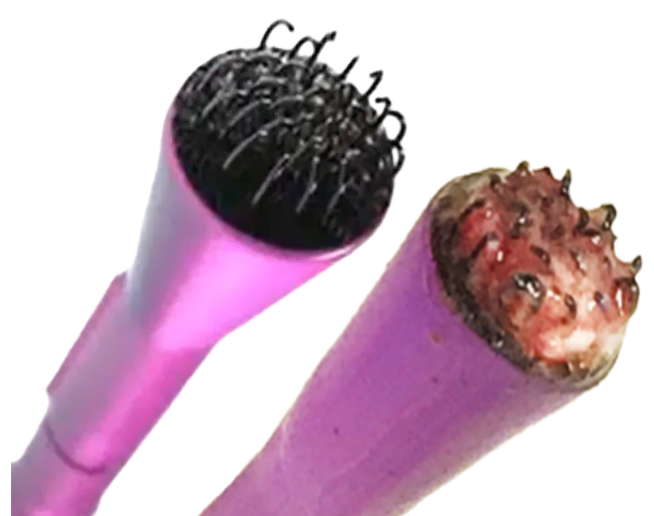

Broader and deeper tissue sampling procedure may help clinicians reach organisms missed by surface swabs and overcome limitations of focal wound biopsy sampling
ANAHEIM, CA, UNITED STATES, August 26, 2026 /EINPresswire.com/ — Histologics LLC is excited to announce that a newly published peer-reviewed study in the Journal of Wound Care reports that a minimally invasive Kylon® fabric curettage based biopsy procedure recovered greater quantities and diversity of microbial nucleic acid and, in some patients, materially changed the interpretation of microbial burden when compared with flocked wound swabbing.
The study, “Comparing flocked swab to nylon fabric curettage brush for the detection of infections in hard-to-heal wounds,” by Pejman Rahimian, PhD, et al in the August 2026 issue of the Journal of Wound Care. The findings raise a broader question in chronic wound diagnostics: Are clinicians adequately sampling the microorganisms actually residing within the wound bed? Experimental imaging has demonstrated markedly patchy bacterial distributions within wounds, while human tissue studies have shown that bacterial aggregates can occur at different depths within wound tissue. Consequently, the organisms recovered from any diagnostic specimen can depend on both where and how deeply the wound is sampled.
Sampling the wound—not simply touching its surface
Conventional swabbing remains attractive because it is rapid, inexpensive and minimally invasive. However, swabbing and tissue biopsy do not always recover the same microbial communities. Studies using molecular sequencing have demonstrated surprisingly low concordance between paired swab and tissue specimens from the same diabetic foot ulcers, suggesting that different sampling techniques interrogate different microbial compartments of a
wound.
Traditional punch biopsy addresses part of this problem by retrieving actual tissue and remains an important reference sampling technique
Systematic reviews have found advantages for tissue biopsy, particularly when quantitative microbial burden or resistant organisms are clinically important. But punch biopsy is invasive, requires appropriate clinical expertise and obtains tissue from a small, focal portion of a larger and biologically heterogeneous wound.
This creates a potential sampling dilemma: a surface swab may be broad but relatively superficial, while a punch biopsy may be deep but geographically narrow. Tangential curettage offers a different sampling concept. The Kylon® biopsy devices evaluated in the new study are designed to engage the wound surface mechanically and retrieve tissue from across and within the wound bed. The new study provides supporting evidence. In eight patients with hard-to-heal wounds, paired specimens were obtained with a flocked swab and the Kylon® biopsy brush and analyzed using the same validated molecular PCR methodology.
Among the reported findings:
• Pathogen detection concordance between the sampling methods was only 65%
• The curettage biopsy demonstrated 84% sensitivity compared with 81% for the flocked swab
• Curettage biopsy specimens produced approximately 30% greater nucleic-acid recovery
• 71% of paired targets showed lower PCR cycle-threshold values with the biopsy brush, consistent with greater recovery of target nucleic acid
• For 41% of microbial and resistance-gene targets, the additional material recovered by curettage changed the study’s predefined interpretation from a microbial burden consistent with colonization to one more consistent with infection
• At the patient level, the sampling method changed the study's infection classification in 50% of patients
The emerging issue: diagnostic technology is only as good as the specimen
Molecular diagnostics, including quantitative PCR and next-generation sequencing, can identify organisms that conventional culture may fail to recover. But increasingly sensitive laboratory technology cannot detect microbial DNA that was never captured. This makes wound sampling an crucial component of precision wound diagnostics.
The current study extends that concept by evaluating a purpose-designed Kylon® biopsy device, vs. traditional methods.
“With increasingly sophisticated molecular diagnostics, we have focused enormous attention on what happens after the specimen reaches the laboratory. These findings suggest that equal attention should be paid to how we obtain the specimen in the first place,” said study co-author Neal Lonky, MD, MPH. “A chronic wound can contain microbial communities at different depths and locations. Broad tangential tissue sampling may provide a practical way to interrogate more of that.”
About Kylon® and Histologics LLC
Histologics is a medical device with a mission to compassionately save lives, and is dedicated to advancing gentle, effective tissue management solutions for women’s health, advanced wound care, and veterinary medicine. Its proprietary, patented, and award-winning Kylon® technology platform is a hooked brush array medical fabric that can safely and compassionately be used to precisely and gently remove tissue from the body for diagnostics and therapeutic removal of diseased tissue. Histologics provides clinicians with innovative cost-effective tools that enhance procedural efficiency, accuracy, and patient comfort. Histologics products have been adopted by leading academic, government, HMO, hospitals, private practice settings, and home settings
nationwide.
A compendium of research and clinical evidence over the last 15 years can be found at: https://www.histologics.com
About the Study
Rahimian P, Low M, Lonky N. Comparing flocked swab to nylon fabric curettage brush for the detection of infections in hard-to-heal wounds. Journal of Wound Care. 2026;35(8):654–661. doi:10.12968/jowc.2025.0575.
The investigation was a retrospective, blinded paired-sample case series involving eight patients. The manuscript discloses that the nylon fabric curettage biopsy device incorporates Kylon® fabric and is marketed by Histologics LLC, and that co-author Neal Lonky, MD, MPH, is Founder and CEO of Histologics LLC.
Selected Supporting Literature
1. James, et al. 2008. Wound Repair Regen
2. Copeland-Halperin, et al. 2016. J Wound Care
3. Travis, et al. 2020. BMC Microbial
4. Mahnic, et al. 2021. Front Med
5. Ibberson, et al. 2022. Proc Natl Acad Sci USA
6. Travis, et al. 2023. Int Wound J
7. Malic, et al. Journal not specified
Lily Ramos
Histologics LLC
+1 888-738-9757
email us here
Visit us on social media:
LinkedIn
Instagram
Facebook
TikTok
X
Legal Disclaimer:
EIN Presswire provides this news content “as is” without warranty of any kind. We do not accept any responsibility or liability
for the accuracy, content, images, videos, licenses, completeness, legality, or reliability of the information contained in this
article. If you have any complaints or copyright issues related to this article, kindly contact the author above.

Media gallery


