
Rick Gregory Shares a Life of Loss, Recovery, Love, and Spiritual Remembering in Finding Our Way Back to What We Are
Jackson, Mississippi Sep 23, 2026 (Issuewire.com) There are seasons in life when people do not need another command,

Press Release Disclaimer: This is a press release distributed through the XPR Media network. It has not been independently verified by our newsroom.


Jackson, Mississippi Sep 23, 2026 (Issuewire.com) There are seasons in life when people do not need another command, another doctrine, or another voice telling them how far they still have to go. They need something gentler. They need a quiet place to breathe. They need words that do not push, shame, persuade, or perform.
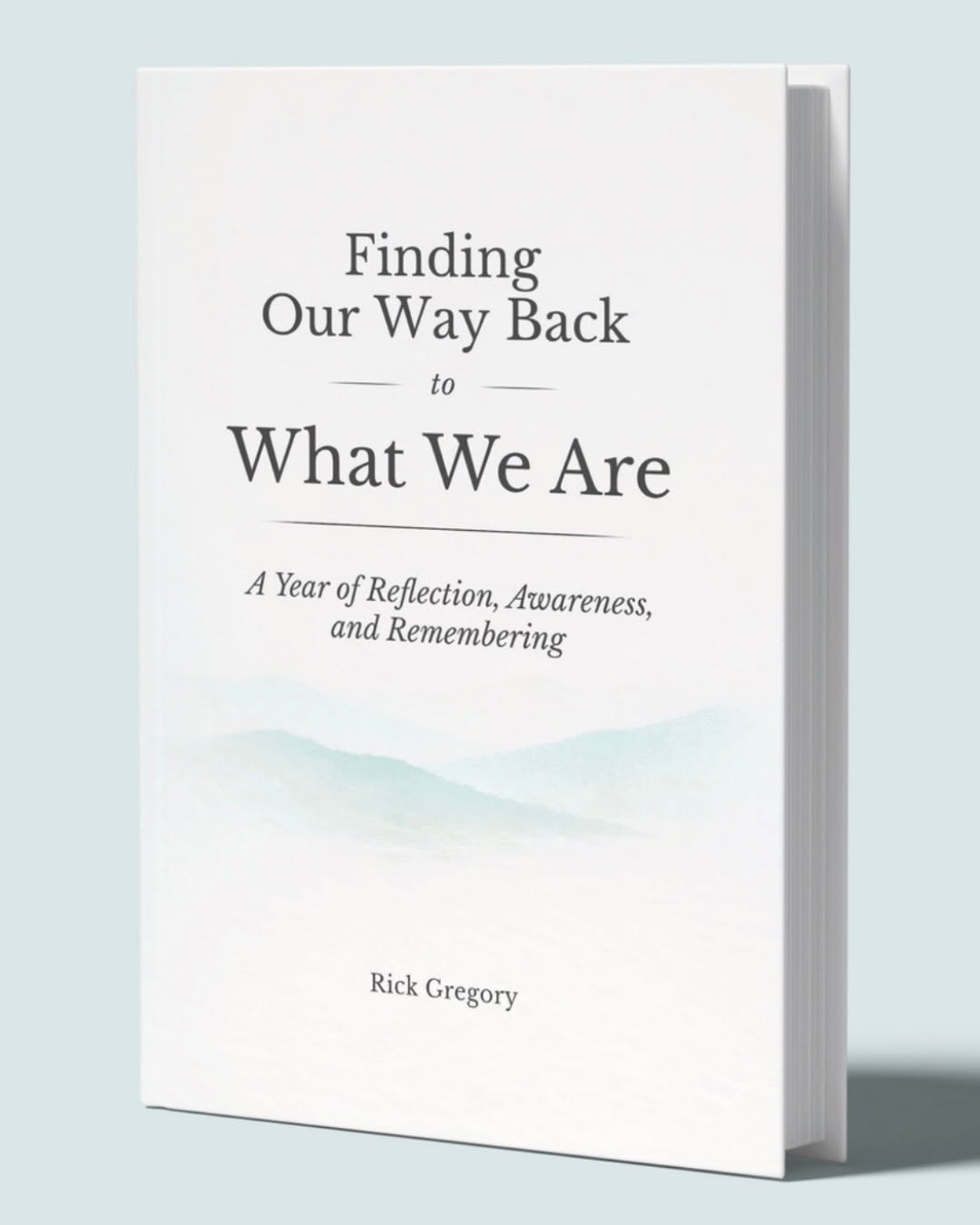
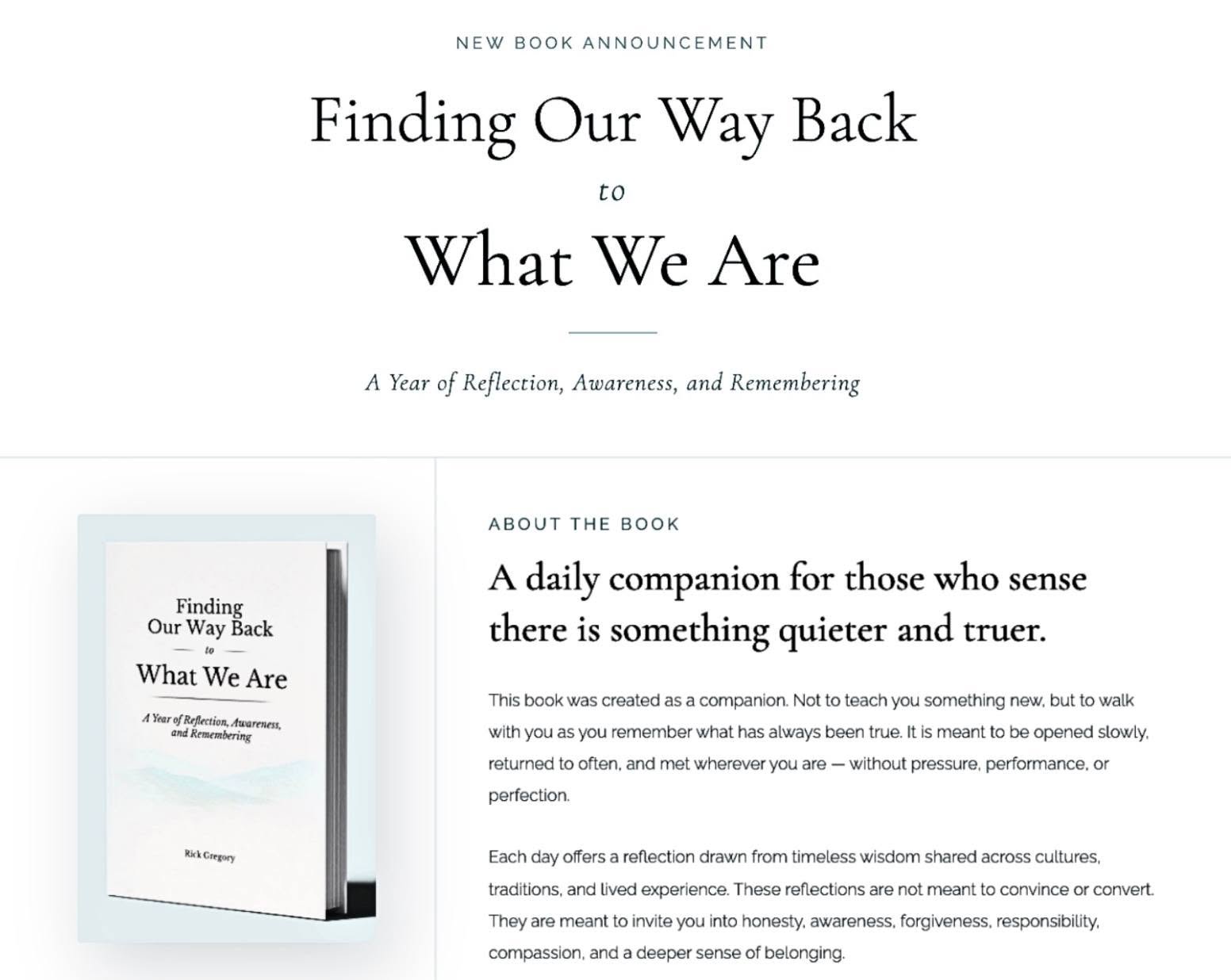
That is the heart of Finding Our Way Back to What We Are, the deeply reflective daily book by Rick Gregory.
Written as a yearlong companion, the book offers 365 daily reflections for people who are ready to pause, notice, question, heal, and remember. It is not a traditional devotional, nor does it ask readers to adopt a particular belief system. Instead, each entry invites them to stop trying to become someone worthy of love and begin recognizing that love has been present all along.
Gregory did not write the book from a place of distance. Its message grew from a life that had been questioned, broken open, rebuilt, softened, and changed by love.
Before becoming an author, spiritual life coach, recovery mentor, and podcast host, Gregory was a seeker. From a young age, he carried questions about God, meaning, belonging, and the truths that seemed to exist beneath ordinary life. At nineteen, a profound spiritual experience led him into years of religious study and pastoral ministry.
He also knew from an early age that he was gay. For years, that truth existed alongside the belief that something about him had to change for him to be acceptable to God. He prayed, struggled, denied parts of himself, entered marriage, became a father, served in ministry, and attempted to live within a framework that could not fully hold his humanity.
Eventually, Gregory came to a realization that changed the course of his life: God loved him exactly as he was.
That realization did not make life simple. It made it honest.
Gregory left his marriage and the pastorate and began re-examining much of what he had been taught to believe. What followed was a long process of questioning, grieving, learning, and slowly allowing love to become larger than fear.
One of the defining heartbreaks of his life came with the death of his first husband, Kevin. They shared eight years together. Following a work-related injury, Kevin lived with chronic pain and underwent multiple surgeries. After running out of his prescribed pain medication, he took medication from a neighbor, believing it was similar to what he had been given. It was a time-release form of morphine, and Kevin died in his sleep from respiratory failure.
In the aftermath, Gregorys grief deepened, his drinking escalated, and beliefs that had once offered certainty could no longer answer the questions loss had placed before him. That period became the beginning of a profound spiritual deconstruction and, eventually, a path toward recovery and a more expansive understanding of God, love, and human worth.
Recovery became one of Gregorys great teachers. Through Alcoholics Anonymous, he learned the importance of honesty, openness, willingness, responsibility, and surrender. He came to understand that responsibility does not mean blaming oneself for everything that has happened, but choosing how to respond now. He also learned that even painful chapters can become part of a larger story of healing and service.
Those lessons run throughout Finding Our Way Back to What We Are.
After years of walking alongside others in recovery and spiritual exploration, Gregory often found himself reaching for daily reflection books to share with friends, sponsees, and fellow travelers. Many of the books he encountered, however, felt too narrow, too filled with religious jargon, or too focused on the idea that what people needed was somewhere outside themselves and had to be earned.
One evening, after closing another such book in frustration, he asked himself why he did not write the kind of book he wished existed.
That question became the beginning of Finding Our Way Back to What We Are.
The result is a yearlong companion shaped by Gregorys journey from certainty to curiosity, from fear-based belief to inclusive love, and from separation to belonging.
At the center of the book is the word LOVE, written in a broad and inclusive spiritual sense. Gregory uses LOVE not simply as emotion or affection but as the source of life itself. It becomes a name for what different traditions have described as God, Spirit, Presence, Consciousness, the Divine, or the sacred ground of being.
That approach creates room for religious readers, spiritual seekers, people in recovery, those healing from religious pain, agnostics, and anyone quietly wondering whether life might hold something deeper than fear and striving.
The structure of the book reflects the gradual nature of inner change. Each month opens a different doorway into awareness through themes that include thought, honesty, forgiveness, compassion, oneness, surrender, grace, healing, gratitude, and love in action.
Each daily reflection contains a grounding passage, a simple way of seeing, a guiding quote, a question for contemplation, and a journaling space titled What Im Noticing Today. Rather than asking readers to master a spiritual checklist, the book invites them to take one reflection at a time into their daily lives and notice what it awakens.
Gregory understands spiritual displacement personally.
After meeting his husband, Glen, both men hoped to find a church home where they could grow spiritually and belong. They attended a church they loved, developed relationships, joined small groups, and went through the membership process. They were eventually told they would not be welcomed as members unless they signed an agreement rejecting the sacredness of their marriage.
For Gregory, the experience deepened his sensitivity toward people who still long for spiritual connection but feel wounded, excluded, or unable to belong within certain religious environments.
He does not write against religion. His work moves beyond the limits of fear and returns instead to love, compassion, forgiveness, service, awareness, acceptance, and belonging.
That same spirit shapes the way the book approaches suffering. For readers experiencing grief, uncertainty, transition, recovery, spiritual questioning, or inner loneliness, the reflections offer companionship rather than instruction. They do not attempt to explain pain away. They make room for it.
One of the books central themes is the difference between becoming and remembering. Modern life often tells people to improve themselves, fix themselves, prove themselves, and become something more. Gregory offers another possibility: perhaps the journey is not about adding what is missing but removing the fear, shame, and conditioning that have covered what was there all along.
The book repeatedly questions the belief in separation: separation from others, from life, from the Source, and from personal worth. It asks readers to consider whether belonging is something that must be earned or something that can instead be recognized.
The process is not presented as a dramatic spiritual breakthrough. Gregory points toward something quieter. Awakening can happen during ordinary moments: a conversation, a pause before reacting, a willingness to forgive, or a breath taken before self-judgment has the final word.
By the closing pages, the image that remains is one of finding the way home. Like Dorothy in The Wizard of Oz, readers are reminded that the road, companions, questions, and courage discovered along the journey all matter, but home may never have been as far away as it appeared.
Finding Our Way Back to What We Are is written for seekers, questioners, people in recovery, people healing from spiritual wounds, the spiritually curious, the tired, the hopeful, and those beginning to wonder whether what they have been searching for has been close all along.
In Gregorysown words, I write to share the things I most want to remember.
Through this book, he shares those things with readers who may need them most.
Rick Gregory is available for interviews, podcast appearances, guest articles, speaking events, workshops, and book club conversations.
More information about Rick Gregorys writing, podcast, coaching, spiritual work, and Finding Our Way Back to What We Are can be found through The Awakened Collective at theawakenedcollective.org.
The book format, themes, audience, daily-reflection structure, and central concept of remembering rather than becoming come from the approved book release. The biographical material, recovery journey, origins of the book, church experience, and media availability come from the approved author release.
Stay connected with Rick Gregory and explore his work through:

Source :https://theawakenedcollective.org/
This article was originally published by IssueWire. Read the original article here.


