The Preferred Choice for High-End Villas: DERCHI’s Certified Aluminium Picture Windows for Premium European Developments
FOSHAN, CHINA, August 24, 2026 /EINPresswire.com/ -- When developers and architects specify windows for a high-end

Press Release Disclaimer: This is a press release distributed through the XPR Media network. It has not been independently verified by our newsroom.

FOSHAN, CHINA, August 24, 2026 /EINPresswire.com/ — When developers and architects specify windows for a high-end villa project in Europe, the conversation quickly goes beyond glass size. A certified aluminium picture window has to pass a far more rigorous evaluation: Does it carry CE marking for the European market? Can it help the building meet the energy performance targets set by UK Part L, Germany’s GEG, or France’s RE2020? Will the manufacturer deliver on time without disrupting the construction programme — and what happens if something needs resolving after installation? These are the questions that separate a supplier worth partnering with from one that simply offers attractive visuals. DERCHI (Guangdong Dejiyoupin Doors and Windows Co., Ltd.) addresses each of them through certified product design, multi-standard compliance, and a project delivery model built around the realities of premium residential construction.
What Is an Aluminum Picture Window, and Why Does It Work for Luxury Villas?
A picture window is a fixed, non-opening frame designed to frame a view as if it were a painting on a wall — no moving sash, no visible hardware, just an uninterrupted expanse of glass. For high-end residential developments, that simplicity translates into real advantages: maximum daylighting, cleaner sightlines, and the ability to span larger panel dimensions without the structural compromises that opening windows require.
Fixed aluminium picture windows are also inherently more airtight than operable alternatives. With no mechanical opening mechanism, the perimeter seal is continuous, which directly benefits both thermal and acoustic performance — two specifications that premium buyers in Germany, France, Scandinavia, and the UK scrutinise very closely. Aluminium’s high strength-to-weight ratio allows slimmer profiles and larger glazed areas compared to PVC or timber, giving contemporary villa designs the slim-frame, floor-to-ceiling panoramic aesthetic that defines the segment.
CE Certification and European Energy Compliance: The Baseline That Can’t Be Skipped
Supplying windows into the European Economic Area requires CE marking under the EU Construction Products Regulation — without it, a product cannot legally enter the market regardless of how well it performs. For developers sourcing from outside Europe, this is often where procurement gets complicated, as many manufacturers hold only domestic certifications that carry no legal weight on a European project.
DERCHI holds CE certification alongside NFRC (USA), AS2047 (Australia), CSA (Canada), Energy Star, ISO 9001, and Hurricane Certification. That international certification portfolio means its products are engineered against genuine performance benchmarks — independently verified for structural integrity, water tightness, and air permeability — rather than tested only to a single domestic standard.
Beyond market access, European developers face a second compliance layer: national building energy regulations. Across markets, these frameworks are tightening. Projects need to demonstrate that the window specification contributes to the building’s overall energy performance, which means glazing choices, thermal break design, and glass configuration all feed directly into a compliance calculation. DERCHI’s configurable Low-E glass, triple glazing options, and argon-filled double glazing with PVDF aluminum spacer bars give specifiers the tools to hit those targets — whether the project is a passive-house-influenced villa in Bavaria or a coastal development on the Atlantic seaboard.
Inside the Fix Picture Panoramic Window: Specs That Matter on Site
DERCHI’s Fix Picture Panoramic Window is built on a curtain-wall-inspired structural design using titanium-magnesium aluminium alloy, accommodating fixed glass panels up to 12 m² per unit with a height range of 1,000–3,800mm. For European villa façades that call for full-height glazing from floor to ceiling — a staple of contemporary luxury residential architecture — that capacity is a practical differentiator. Many suppliers cap out well below this, forcing architects to introduce mid-frame mullions that break the visual continuity the design intent requires.
The base glass configuration is 5mm + 27A + 5mm double-tempered glass with argon gas fill. For tighter energy targets, available upgrades include Low-E glass, laminated glass, triple glazing, tinted glass, and reflective glass. Low-E coatings in particular reflect radiant heat while retaining visible light transmission — a specification directly relevant to meeting thermal envelope requirements across northern and central European markets.
On acoustic performance, three-layer sealing with automotive-grade EPDM strips creates a continuous perimeter barrier against road noise, wind, and pressure-driven air infiltration. For villa projects near urban fringes, coastlines, or flight paths — common locations in Western European premium development — this level of sealing is what residents of high-end properties actually expect to feel.
Surface finish options — powder coating, anodising, PVDF coating, and wood-grain — give architects room to align with planning authority requirements or neighbourhood character codes without sacrificing durability. PVDF coating handles UV exposure on south-facing Mediterranean façades; wood-grain anodising suits heritage-sensitive planning zones in the UK, France, and the Netherlands.
A Complete Façade, Not Just One Product
High-end villa projects rarely specify picture windows in isolation. A typical luxury façade combines fixed picture panels with sliding doors, casement windows, or bi-fold openings — all requiring consistent sightlines, matching surface finishes, and compatible hardware across the full elevation. Sourcing these from different suppliers introduces coordination risk: mismatched profiles, inconsistent colour batches, and fragmented warranty coverage across the envelope.
DERCHI offers a full aluminium door and window range — sliding doors, casement windows, bi-fold doors, swing doors, and entry doors — designed to work together within the same product system. A single supplier for the entire façade means unified specification, one set of technical drawings, and a single point of accountability throughout. It also gives developers access to whole-house customisation across colours, glass configurations, and hardware finishes — so a wood-grain picture window in the main living space aligns visually with an adjacent sliding terrace door, rather than arriving as two separately sourced products that almost match.
Supply Reliability: The Procurement Risk European Developers Actually Worry About
For any developer considering a China-based window manufacturer, the practical concern is rarely the product itself — it is supply chain confidence. Will production run to schedule? What if a panel arrives damaged? Who handles the technical communication when the site team has a question three weeks before installation?
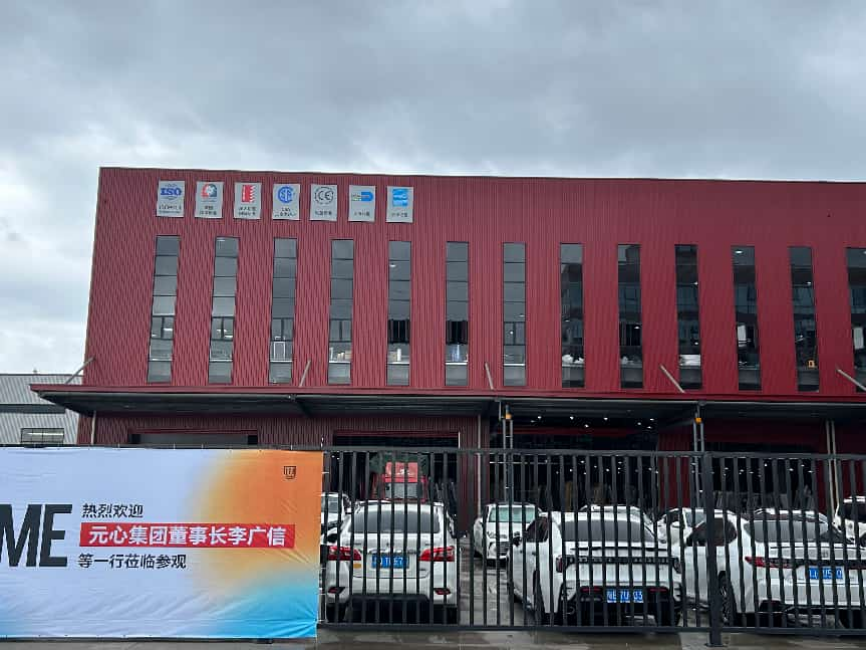
DERCHI’s production infrastructure addresses this directly. A 180,000 m² manufacturing base with an annual production volume exceeding 1,000,000 m², operated through a 360-degree intelligent quality control system, supports the kind of large-scale, schedule-driven output that project procurement requires. Over 100 independently developed patents — including an exclusive Four-Side Six-Point Lock invention patent — reflect genuine in-house engineering rather than reliance on third-party system profiles, meaning production quality is controlled end to end.
The project workflow runs from initial drawings through R&D review, quotation, detail sign-off, on-site measurement confirmation, production, and installation guidance — eight structured stages that keep developers informed and decisions documented throughout. The 10-year warranty and dedicated post-installation support close the loop on the question every procurement manager eventually asks: what happens after the windows go in?
Credibility Built on a Global Project Record
Trust in a supplier ultimately comes from what they have already delivered. DERCHI has completed over 18,000 projects globally, across villas, hotels, commercial buildings, and residential developments in Europe, North America, the Middle East, Asia, Oceania, and Africa.
Recognised by Xinhua News Agency — one of the world’s major international wire services — as a “China Famous Brand”, and backed by a team of 30+ R&D specialists and a workforce of 600+, DERCHI operates at a scale that supports consistent international delivery. With over 300 overseas franchise partners and a global service network, there is established on-the-ground reach to support European projects beyond the factory gate.
For European villa developers and architects evaluating their window specification, the decision comes down to whether a supplier can genuinely perform across all the dimensions that matter: compliance, thermal and acoustic performance, large-format panel capability, full façade coverage, supply reliability, and post-installation support. DERCHI’s Fix Picture Panoramic Window, and the broader product range it sits within, is built to meet that standard.
Full product information, project references, and customisation options are available at www.dejiypwindow.com.
DERCHI
DERCHI
email us here
Legal Disclaimer:
EIN Presswire provides this news content “as is” without warranty of any kind. We do not accept any responsibility or liability
for the accuracy, content, images, videos, licenses, completeness, legality, or reliability of the information contained in this
article. If you have any complaints or copyright issues related to this article, kindly contact the author above.

Media gallery